
Have you ever asked ChatGPT to write something and ended up with an answer that sounds a little too generic? Or tried generating images with AI and got irrelevant outputs that you never expected?
I’ve experienced this problem. Sometimes, the tool isn’t the issue. The instructions should be detailed and clear. A well-written AI prompt can make a real difference.
It gives the tool context, explains your requirement, and guides the result in the right direction. Whether you’re writing blog posts, designing product ads, or planning your social media campaign, you should write better prompts for the AI tools.
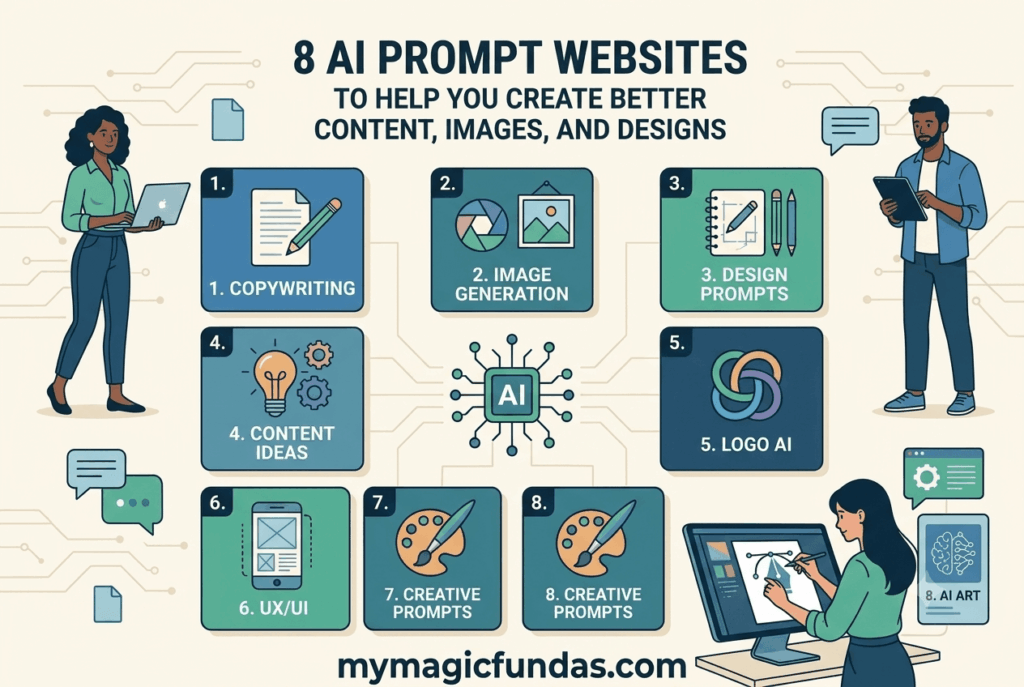
And you don’t have to figure it all out from scratch. Websites offer ready-made prompts, creative examples, and tips for getting more out of tools like ChatGPT, Gemini, Claude, and AI image generators.
6 AI Tools That Give Ready-made Prompts For Your Tasks
I’ve picked eight AI prompt websites worth exploring, especially if you’re looking for fresh ideas or want to improve the way you work with AI.
1. MeiGen AI: Find Ideas for Your Next Visual Project
Coming up with an image idea can sometimes be harder than creating it. You might need stunning product advertisements or eye-catching social media graphics, but still be unsure about the lighting, background, or overall style.
MeiGen AI is featured in the original carousel as a place to explore AI-generated visuals, including portraits, product advertisements, illustrations, and creative designs.
Browsing visual examples can help you work out what you like before you start writing a prompt. You might discover that a clean background works better for your product, or that softer lighting gives an image the look you’re after.
If you create a promotional image for a skincare brand, get a prompt like a glass serum bottle on a beige stone surface, with subtle botanical details, soft natural lighting, and a minimal, premium look. That gives the AI a much clearer starting point.
2. PromptBase: Find Prompts for Specific Tasks
Sometimes, you already have the right AI tool but aren’t getting the results you want. That’s where a prompt marketplace can come in handy.
PromptBase allows users to discover and purchase prompts for different AI applications. Its marketplace covers areas such as writing, marketing, image generation, and other creative tasks.
Imagine you’re launching an online store and want your product images to have a consistent look. You could explore prompts for commercial photography, product mockups, and advertising visuals, then adapt a suitable one to match your brand.
You may also find it useful to study how prompts are written. Look at the details included in a prompt: the subject, context, intended result, style, and any restrictions. These elements can teach you how to write better instructions of your own.
3. FlowGPT: Discover How Other People Use AI
FlowGPT provides a community-oriented space for exploring prompts and AI conversations. Depending on the content available, you can find ideas related to writing, brainstorming, storytelling, productivity, and creative experiments.
For example, if you’re running a small business and struggling to plan your social media content, a community prompt might give you a starting point for a product launch or a monthly content calendar.
The important part is making the prompt your own. Add details about your business, target audience, products, and preferred tone rather than expecting someone else’s instructions to work perfectly for your situation.
As with other community platforms, review the output carefully and avoid sharing confidential business or customer information.
4. PromptHero: Explore AI Art Prompts and Styles
If you’ve ever had a clear picture in your mind but struggled to describe it in words, PromptHero is worth a look. The website helps users discover AI art prompts and visual examples associated with image-generation tools.
You can explore ideas for illustrations, fantasy landscapes, character designs, posters, and other digital artwork. The real benefit is seeing how different visual details work together.
Take a cinematic landscape, for example. The image might use dramatic clouds, atmospheric lighting, distant mountains, a wide-angle composition, and a carefully chosen color palette to create a particular mood.
Once you understand which elements make a visual appealing, it’s easier to describe them in your own prompts. You could use a reference to develop an original concept for a poster, book cover, or social media graphic.
6. AIPRM: Simplify Repetitive Writing Tasks
If you use ChatGPT regularly, you’ll probably recognize this situation: you keep explaining the same requirements for blog posts, marketing emails, social media captions, and other routine tasks. It gets repetitive after a while.
AIPRM is known for its prompt templates and resources for professional tasks, including SEO content planning, blog writing, marketing copy, and email creation.
For instance, if you publish articles regularly, a structured prompt can help you organize the process. You might specify the topic, intended audience, search intent, tone, headings, and approximate word count before drafting begins.
However, templates are only a starting point. You’ll still need to check facts, add relevant examples, bring in your own experience, and edit the final article. A polished template doesn’t automatically guarantee useful or original content.
7. Learn Prompting: Understand What Makes a Good Prompt
Ready-made prompts are convenient, but learning to write your own is even more useful in the long run. Learn Prompting is an educational resource focused on prompt engineering and effective ways to interact with AI systems.
It helps explain the principles behind clear instructions and structured requests. Consider these two prompts.
Basic prompt: “Write a blog about digital marketing.”
More detailed prompt: “Write a beginner-friendly guide to digital marketing for small business owners. Explain SEO, social media marketing, email campaigns, and paid advertising in simple language. Include practical examples, descriptive headings, and actionable advice.”
The second prompt gives the AI more information about the audience, subject, and expected structure. That makes it easier to produce a relevant first draft.
You can improve your instructions further by specifying the tone, length, output format, and any information the AI should avoid inventing. For complex tasks, including an example of the style you want can also help.
These techniques aren’t limited to blog writing. They can be useful for brainstorming, research, coding, business planning, and everyday productivity.
If you want to move beyond copying prompts and understand why certain instructions work better than others, Learn Prompting is a useful place to start.
Which AI Prompt Website Should You Try First?
You don’t need to use all eight websites. Start with the one that matches what you’re trying to accomplish.
- Find ideas for AI-generated visuals: MeiGen AI
- Discover specialized prompts: PromptBase
- Learn from community-created prompts: FlowGPT
- Explore AI art styles: PromptHero
- Find structured writing templates: AIPRM
- Learn prompt engineering: Learn Prompting
Keep in mind that these platforms serve different purposes. Some focus on prompt examples or marketplaces, while others provide educational resources or image-related tools. Features, pricing, and access requirements can change, so check the current details before choosing a platform for regular use.
Final Thoughts
AI prompt websites are useful not just because they give you instructions to copy and paste, but because they expose you to new ideas and ways of working.
If you’re interested in AI-generated images, explore visual examples and experiment with different styles. If writing is your main focus, look for templates that make your workflow easier.
And if you want to understand AI more deeply, spend some time to learn the fundamentals of prompt engineering. You don’t need to master every tool at once.
Choose one website, try a few prompts, and pay attention to how small changes affect the results. Finally, the real advantage comes from learning how to communicate your ideas clearly. The better you become at that, the more useful AI can be.
Frequently Asked Questions
1. What are AI prompt websites?
AI prompt websites offer ready-made instructions, examples, templates, or educational resources that help people get better results from artificial intelligence tools. Depending on the platform, you may find prompts for writing, image generation, coding, marketing, and productivity.
2. Where can I find ChatGPT prompts?
PromptBase, FlowGPT, and AIPRM are useful places to explore prompts and templates. OpenAI’s official prompt engineering guide can also help you learn how to write your own instructions.
3. Which websites can help with AI image prompts?
MeiGen AI and PromptHero are useful starting points for visual inspiration. You can also explore Nano Banana-related resources for image generation and editing. Check the current features of each website before relying on it for a particular task.
4. Are AI prompt websites free?
Some websites provide free resources, while others charge for individual prompts, subscriptions, or additional features. Pricing and access limits may change, so check the current terms before signing up or making a purchase.
5. Can AI prompts help with SEO content writing?
Yes. AI prompts can help with brainstorming topics, organizing article outlines, exploring search intent, drafting FAQs, and planning content. However, effective SEO also depends on your original insights, natural keyword use, and reader experience.
